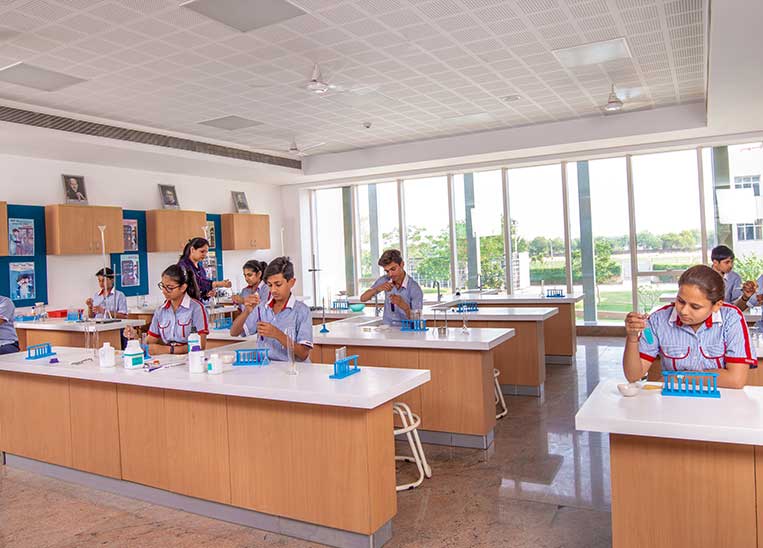

When comparing CBSE schools in Gurgaon, parents often ask whether a school offers practical learning. A more useful follow-up is to ask what students actually do, which subject concepts they use and how teachers check their understanding afterwards.
Experiential learning connects a task or experience with thinking about what happened. Students investigate a question, apply what they know and explain what they learned. Used thoughtfully alongside subject teaching, it gives parents another way to understand the quality of classroom learning.
Begin with the concept the activity is meant to teach
A project needs a clear purpose. Making a model, conducting an investigation or presenting an idea can be useful when the task helps students work through a defined concept.
Ask the teacher what students should understand by the end. How does the activity relate to their subject work? What information or skill do they need before starting? What will they practise during the task?
These questions make it easier to distinguish a learning activity from an attractive display. A finished product may look impressive, but the explanation behind it reveals whether a student understands the work.
Follow a practical learning cycle
Consider a hypothetical classroom investigation about water use. Students might begin with a question about how much water a particular routine uses. They could estimate quantities, decide how to collect information and record observations.
Mathematics could help them compare measurements. Science could help them discuss the properties or movement of water. Language work could support writing a clear explanation of their findings.
The task should end with reflection. Were the measurements reliable? What assumptions did the students make? Would they change their method if they repeated the investigation? This is an illustrative classroom activity.
Give each student a role in the thinking

Group work can create opportunities to discuss ideas and divide responsibilities. It also needs careful organisation so every student participates in learning.
Ask how teachers allocate roles, review contributions and check individual understanding. A student who collects information should have a chance to interpret it. A student who creates a presentation should understand the evidence behind the conclusions.
An individual explanation, short written reflection or follow-up question can help the teacher see what each child understands. The group result and the student's own learning both deserve attention.
Keep subject knowledge and feedback visible
Practical tasks need supporting knowledge. Students may require a worked example, vocabulary explanation or focused lesson before applying a concept independently. They also need feedback that tells them what to improve.
For parents, the useful question is how practical activities fit into the wider academic programme. Ask how teachers connect them to regular lessons, revision and assessment. Find out how students revisit a concept if their work reveals a misunderstanding.
There is no need to assume that every lesson must become a large project. Short investigations and carefully chosen practical tasks can be discussed alongside reading, explanation and individual practice.
Understand the Real World Curriculum at GD Goenka Signature School
Our Real World Curriculum describes learning through problems, projects and questions connected with real situations. It brings this approach into the school's CBSE education and emphasises communication, critical thinking and collaboration.
For a parent, that description is a starting point for a more detailed conversation. Ask for an example appropriate to the intended grade, the subject concepts involved and the feedback students receive.
You can also ask how the approach changes as children move from primary to middle and senior classes. A younger child's guided exploration and an older student's investigation require different levels of responsibility and subject depth.
Ask these questions during a school visit

- Can you explain a recent practical task for the grade my child would join?
- Which subject concepts did students use during it?
- How did teachers check each child's understanding?
- What happened when a student needed more help?
- How were students asked to reflect or improve their work?
- How does practical learning fit with written work and assessment?
Where possible, look at an example of student work together with the teacher's explanation. Respect the school's privacy arrangements and ask for materials that can appropriately be shared with visiting families.
Continue the conversation at home
When your child describes a task, ask how they approached it. What did they expect to happen? What evidence changed their mind? Which part would they improve? You can help them explain their thinking without taking over the assignment.
For a parent looking at CBSE schools in Gurgaon, these conversations make classroom claims easier to assess. They shift attention towards the work students do and the understanding they can demonstrate.
To explore how the approach fits your child's next grade, arrange an admission enquiry or campus visit at GD Goenka Signature School. Ask the team about subject learning and examples of practical work within the programme.
Frequently asked questions
What is experiential learning at school?
It involves learning through a task or experience, then examining what happened and explaining the resulting understanding. The activity should connect to a clear learning purpose.
Does project work remove the need for subject lessons?
Students still need explanations, subject knowledge and practice. Ask how the school combines these with practical tasks and assesses individual understanding.
How can parents evaluate practical learning?
Ask for a grade-specific example, the concepts it teaches and the feedback students receive. Look for evidence that each student can explain the work.