
Primary school is where children begin moving from basic foundational skills towards more independent thinking.
A strong primary-school education should protect curiosity rather than turn learning into memorising facts. This is where project-based and real-world learning can make a meaningful difference.
What Is Project-Based Learning?
Project-based learning gives students a question, challenge or real situation to investigate. Instead of learning every subject completely separately, children may use several skills within one project.

For example, a project about a river might involve geography, science, mathematics, English and art. Children start to understand why the knowledge they learn in class matters outside the classroom.
Why Is This Valuable in Primary Classes?
Young children often learn well when they can connect an idea with something they can see, discuss, build or investigate. Real-world activities give concepts meaning.
Does Project-Based Learning Replace Strong Academics?
It should not. Project-based learning works best when it strengthens academic foundations rather than replacing them.
How Does It Build Critical Thinking?
Students may need to compare ideas, test possibilities, explain decisions and change their approach when something does not work.

Why Does Interdisciplinary Learning Matter?
The real world is not divided into school periods. Helping children see connections between subjects early can make learning feel more coherent and purposeful.
What Should Parents Look for in a Primary School?
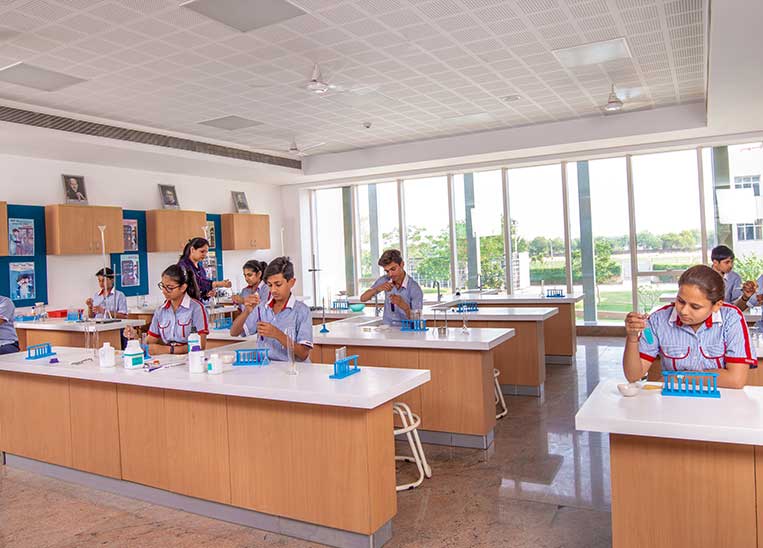
Ask how children actually learn. Look for discussion, building, experimenting, presenting, age-appropriate libraries, science resources and technology spaces.
Real-World Learning at GD Goenka Signature School
At GD Goenka Signature School, the Primary Wing covers Grades III to V and connects with the school’s Real World Curriculum™ approach.
For parents evaluating a primary school in Gurgaon, this provides an opportunity to consider not only what children study, but how they learn to use what they know.
Conclusion
Primary education should build more than the ability to remember information for a test. It should help children become curious, capable learners who can understand a problem, ask thoughtful questions and apply knowledge confidently.
Frequently Asked Questions
What is project-based learning for primary students?
It is an approach where children learn academic concepts through meaningful questions, investigations or projects that may connect several subjects.
Does project-based learning help academic performance?
Its primary value is deeper understanding and application. It should complement strong literacy, numeracy and subject teaching.
Is project-based learning suitable for CBSE?
Yes. Schools can deliver the CBSE curriculum while using projects and experiential activities to help students understand and apply concepts.